How Proper Grading and Walls Solve Sloped Yard Problems
A sloped yard can look great from the street, but it often comes with headaches once you live with it through a few Ohio seasons. Homeowners near Clearfield and across Central Ohio commonly deal with soil washing downhill, muddy low spots at the bottom of the slope, and water that seems to funnel toward the house. On steeper properties, the biggest frustration is simple, the yard feels hard to use. It is tough to place a patio, build a walkway that feels safe, or maintain healthy turf when the ground never sits still.
At Double A Outdoor Living, we evaluate sloped yards throughout the area and help homeowners turn difficult grades into stable, functional outdoor spaces. The right approach usually includes some combination of grading, drainage planning, and retaining wall construction. The key is understanding what is causing the slope problems in the first place, then fixing the root cause instead of chasing symptoms every spring.
Why sloped yards in Central Ohio are prone to erosion and runoff
Slope problems rarely come from one issue. Most of the time, erosion and drainage trouble are the result of soil conditions, water flow, and how the property was originally graded working together in the wrong way.
Common contributing factors include:
-
- Clay heavy soils that shed water instead of absorbing it
- Long, uninterrupted slopes that build speed as water runs downhill
- Roof runoff that dumps in the same area storm after storm
- Thin topsoil from years of washout, leaving poor growing conditions
On many properties, water does not gently soak in, it moves. Once runoff starts carving channels, it tends to return to the same path, getting worse over time. That is why sloped yards often look fine in a dry spell, then suddenly show ruts, bare patches, and mulch washouts after a few heavy rains.
How poor grading makes a slope harder to live with
Grading is not only about making things look level. It is about shaping the land so water moves away from the home and toward safe discharge areas. On sloped yards, small grading mistakes can create big problems because water is already moving downhill.
When grading is working against you, you may notice:
-
- Water cutting across the yard instead of flowing around it
- Soil piling up at the bottom of the slope after storms
- Wet areas near the foundation or patio edge
- Steps or walkways that feel slippery or uneven in winter
A common issue is a yard that slopes toward the house or toward a corner where water has no easy way out. Another is a backyard slope that runs straight from the fence line down to the patio, which can cause washouts along the edge of the hardscape. Fixing that is not as simple as adding soil in one spot. It usually requires reshaping the grade so runoff breaks up, slows down, and follows a more controlled route.
The role of compacted soil on a hillside
Sloped yards are often compacted from years of mowing, foot traffic, and natural settling. Compaction matters because even a well graded yard can still shed water if the soil cannot absorb it. On a slope, that runoff has momentum, and momentum is what causes erosion.
Signs of compaction include:
-
- Water beading on the surface instead of soaking in
- Grass that stays thin or patchy on the slope
- Hard soil that is difficult to dig, even after rain
Aeration can help in mild cases, but it is rarely the full answer on steep grades. If water is rushing downhill, the yard needs a plan to slow it, collect it, and keep soil in place. That often means pairing turf improvements with regrading, drainage features, and sometimes a retaining wall system that creates stable, level zones.
Downspouts and concentrated runoff
On many sloped properties, the worst erosion is caused by roof water, not rainfall on the lawn. A single downspout dumping onto a hillside can cut a trench in one season. Even if the slope is gentle, concentrated flow will scour the soil and push mulch and seed downhill.
Common problems include:
-
- Downspouts that discharge onto the slope near the house
- Short extensions that stop right above a garden bed or walkway
- Crushed or disconnected underground lines that leak into the hillside
A professional evaluation looks at where roof water is landing, how it moves during a storm, and where it should be directed instead. Solving slope problems without addressing downspouts is one of the biggest reasons “fixes” do not last.
Professional solutions that stabilize sloped yards
The best outcomes come from designing the yard as a system. That includes how water enters the space, how it moves, where it exits, and how the landscape and hardscape hold their shape in between.
At Double A Outdoor Living, we design targeted drainage solutions and grading plans that match your slope, soil conditions, and goals for the yard.
Depending on the property, solutions may include:
-
- Regrading to reshape the slope and create predictable water flow
- Swales to guide surface runoff without creating erosion channels
- French drains to intercept subsurface water and relieve saturated areas
- Catch basins and drain pipe to collect concentrated flow from downspouts or low points
On some sites, grading alone can improve stability if the slope is mild and the soil can absorb water. On steeper yards, grading often works best when it is combined with retaining wall construction to create terraces, protect transitions, and hold soil where it belongs.
When hardscape is the best way to reclaim a sloped yard
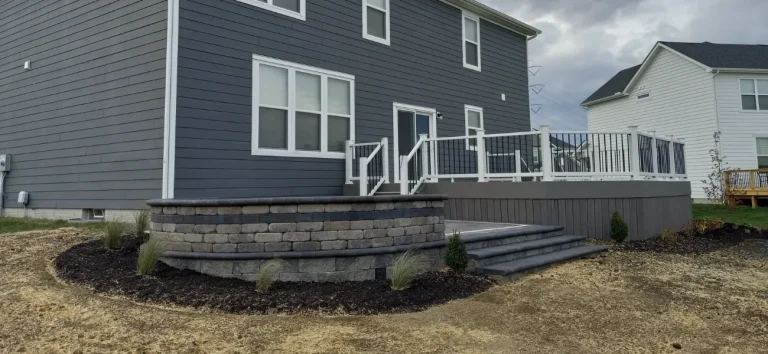
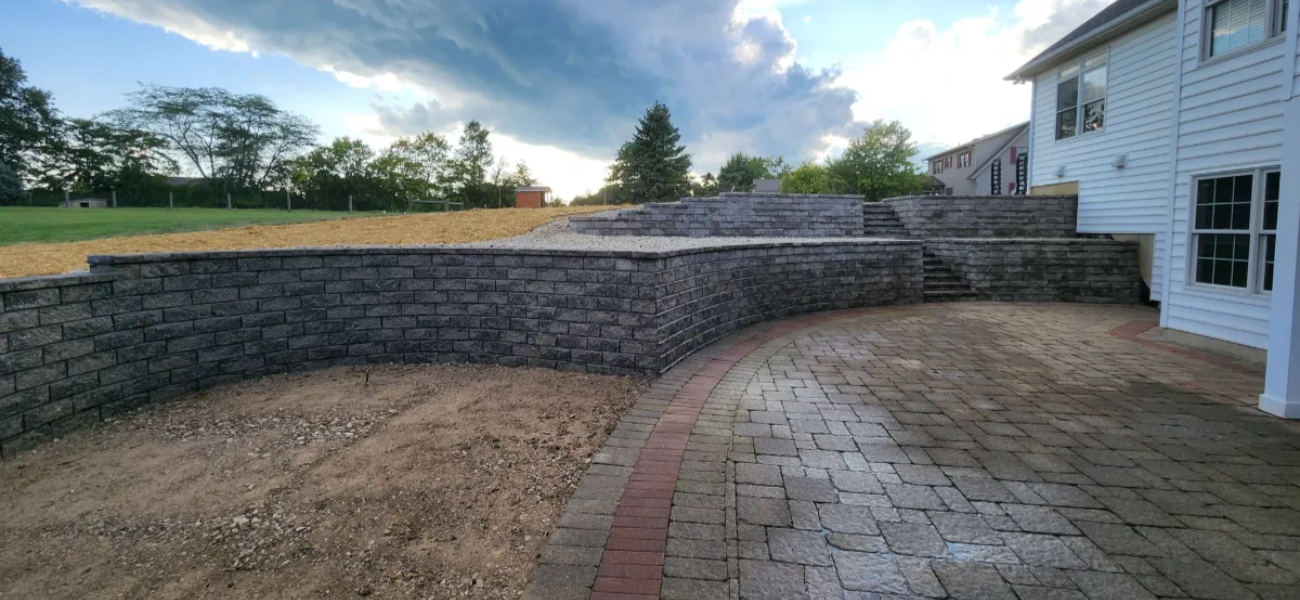
If the slope keeps you from using your backyard, hardscape can be the turning point. Terraces and retaining walls do more than look nice, they create flat, buildable areas where patios, walkways, and planting zones can finally work.
Strategic hardscape improvements may include:
-
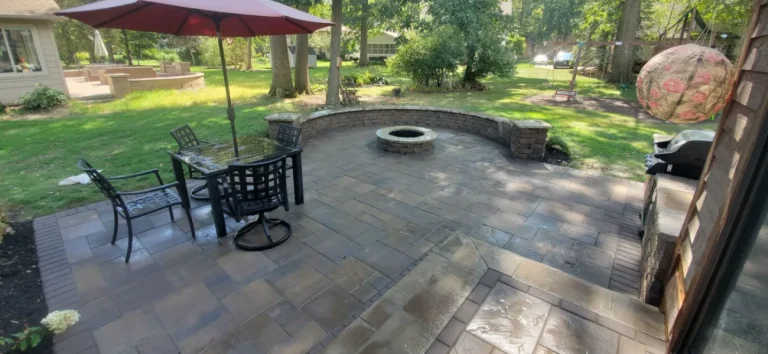
- Installing paver patios on a properly supported level pad
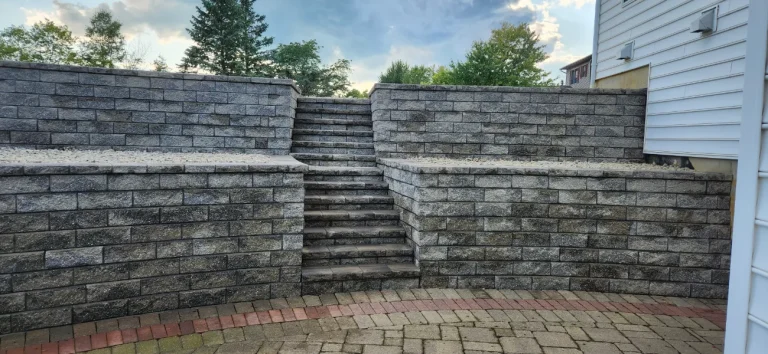
- Building retaining walls to create multi level spaces for seating, play, or gardens
- Adding walkways and steps that feel safe and natural to use year round
A well planned retaining wall system can also protect the investments around it. For example, if you want new planting beds or a refreshed lawn, stabilizing the slope first makes those improvements far more likely to succeed. Many homeowners also choose to add landscape lighting once the layout is finalized, because lighting is much easier to design when the grades and walk paths are settled.
Why quick fixes usually fail on slopes
Sloped yards invite DIY attempts because the symptoms are visible. You see soil washing out, so you add more soil. You see mulch sliding, so you rake it back up. You see a rut, so you fill it. These efforts can help temporarily, but they rarely change the underlying forces that cause the damage.
Common DIY mistakes include:
-
- Adding loose soil that washes away with the next storm
- Planting without stabilizing the grade, leading to exposed roots and dead plants
- Digging shallow trenches that erode, clog, or send water to the wrong place
On a slope, water follows the path of least resistance, and it will keep returning to the same routes until the yard is shaped to guide it differently. Professional solutions focus on controlling flow, stabilizing soil, and creating structure that holds up through freeze thaw cycles and heavy rain.
Budget planning for grading and retaining walls
Costs vary based on slope severity, access to the work area, and whether the yard needs structural retaining walls, drainage systems, or both. A good plan starts with understanding what is required to make the yard stable first, then deciding what improvements you want to build on top of that foundation.
Cost factors include:
-
- Amount of excavation, hauling, and regrading needed
- Wall height, length, and whether a tiered wall system is required
- Drainage components behind walls and across the yard
- Restoration work such as seed, sod, or new lawn installation
Our Landscape Pricing Guide and Hardscape Pricing Guide give homeowners realistic planning ranges so you can compare options and prioritize what matters most, whether that is stopping erosion, building usable outdoor space, or both.
Common homeowner questions
Homeowners dealing with sloped yards often ask:
-
- Can I fix erosion by adding more mulch or topsoil? Not long term. If runoff is not controlled, new material will keep moving downhill.
- Is grading always enough? Not always. Steeper yards often need retaining walls to create stable, level areas.
- Do retaining walls need drainage behind them? Yes. Managing water pressure is critical for wall longevity.
- Will this help protect my home? Controlling runoff and directing water away from the foundation reduces long term risk.
Case study: stabilizing a sloped backyard near Marengo
A homeowner contacted Double A Outdoor Living after repeated washouts along a backyard slope. After heavy rain, soil collected at the bottom of the hill, and the lower lawn stayed soggy for days. They also wanted a space that felt usable, not a hillside they avoided.
We evaluated how water was entering the yard, including roof runoff, and identified where flow was concentrating. The solution included regrading to reshape the slope, adding drainage features to collect water before it gained speed, and installing a retaining wall system to create level zones that could support future improvements.
After completion, runoff was controlled, erosion stopped, and the homeowner had a stable layout they could actually build on, including options for a future paver patio and planting upgrades.
Long term benefits of correcting slope problems the right way
When grading, drainage, and retaining walls are designed as a system, the yard becomes easier to maintain and more enjoyable to use:
-
- Reduced erosion and soil loss after storms
- Less standing water and fewer muddy areas
- More usable outdoor space for patios, paths, and gardens
- Healthier grass and plantings with more consistent moisture
Most importantly, the fixes last. You are not redoing the same repairs every season or watching new landscaping slide downhill.
Why choose Double A Outdoor Living
Sloped yard projects require more than good intentions. They need correct grading, proper drainage planning, and retaining wall construction that is built to handle soil pressure and water movement. Homeowners across Central Ohio trust Double A Outdoor Living because:
-
- We are a fully licensed and insured landscaping and hardscaping company
- We understand local soil, slope, and drainage conditions common in the region
- We build tailored solutions, not generic one size fixes
- We provide transparent planning through our pricing guides
- We are known for consistent 5 star reviews and professional communication
From evaluation through final grading and cleanup, we focus on permanent improvements that protect your property and improve how you live in the space.
Serving Central Ohio communities
Double A Outdoor Living proudly provides grading, retaining wall construction, and landscape services in:
As a locally owned company, we understand how Central Ohio weather patterns and soil conditions impact slopes, drainage, and long term yard stability.
Schedule your sloped yard evaluation today
Turn a difficult slope into a stable, usable outdoor space with professional grading and retaining walls from Double A Outdoor Living
If your yard is washing out, staying muddy, or simply feels unusable because of the slope, do not wait for it to get worse. A proper evaluation can identify where the water is moving, why erosion is happening, and what combination of grading, drainage, and retaining walls will solve it for good.
Call Double A Outdoor Living today or request an estimate online to schedule your consultation. We serve Central Ohio homeowners with expert slope correction, retaining wall construction, and complete landscape design services.