How to Combine Retaining Walls and Paver Patios
Retaining walls and paver patios are both great upgrades on their own, but the real magic happens when they are planned as one system. A wall creates structure and solves grade problems, and a patio creates the comfortable surface you actually live on. When the two are designed together, you get a finished outdoor space that looks intentional, drains properly, and stays stable through Ohio weather.
At Double A Outdoor Living, we build custom outdoor spaces for homeowners in Clearfield and nearby Central Ohio communities who want a yard that is easier to use and easier to maintain. This post breaks down why patios and retaining walls pair so well, where we most often use them, and the design choices that make the project look cohesive and hold up long term.
Why combine retaining walls with paver patios?
A lot of properties around Clearfield, Marengo, and Sunbury have mild slopes, uneven backyards, or grade transitions near the house. Those conditions make it difficult to install a patio that feels level and stays level. You can try to force a patio onto an uneven yard, but that often leads to shifting, water pooling, and edges that settle over time.
A retaining wall changes what is possible. It holds soil in place and allows the yard to be reshaped into stable, usable zones. A paver patio then becomes the “living area” on top of that engineered foundation.
Here are the top benefits of combining retaining walls with paver patios:
-
- Create a level pad where a patio would not otherwise work
When a yard slopes away from the home, a wall can support a raised patio area or help cut into the slope to form a level base. This is often the difference between an awkward, slanted backyard and an outdoor space that actually feels comfortable for furniture and gatherings. - Turn one patio into multiple functional zones
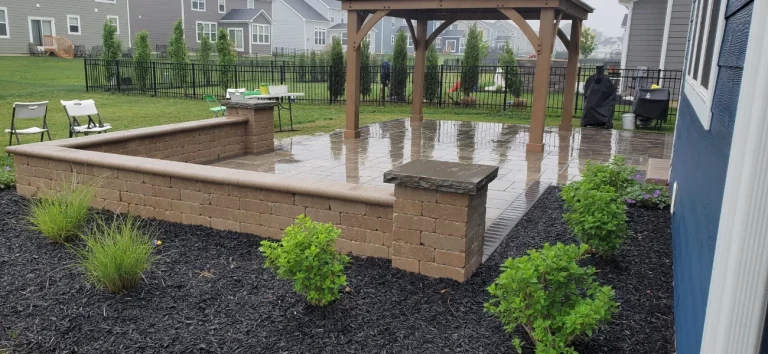
A wall can define edges and separate spaces without needing fences or bulky features. For example, one section can be dining, another can be a lounge area, and a third can be a dedicated spot for a fire pit, all tied together with the same paver style. - Add built-in seating without cluttering the patio
A low wall can double as a seating wall, which is especially helpful in smaller yards where extra chairs eat up space. It also keeps the layout clean and makes the patio feel more like an outdoor room. - Improve long-term stability and reduce erosion
Walls hold soil where it belongs. When they are built correctly with drainage, they reduce washouts that can ruin patio edges, garden beds, and lawn areas. - Get a more cohesive, higher-end look
When wall block and pavers are selected together, the patio and the wall read as one integrated design. That “planned” look often pairs beautifully with upgrades like landscape lighting and surrounding backyard landscaping.
- Create a level pad where a patio would not otherwise work
If you want a patio that feels finished and stays that way, the key is matching the patio surface to the site conditions. In many yards, that means a retaining wall is not an optional add-on, it is the structural piece that makes the patio possible.
Common applications in residential landscapes
Pairing retaining walls with paver patios is not just for steep hillsides. We use this combination in all kinds of yards across Central Ohio, especially where homeowners want a cleaner layout, better drainage, and more usable space. Here are some of the most common ways these features show up in real projects.
1. Raised patios
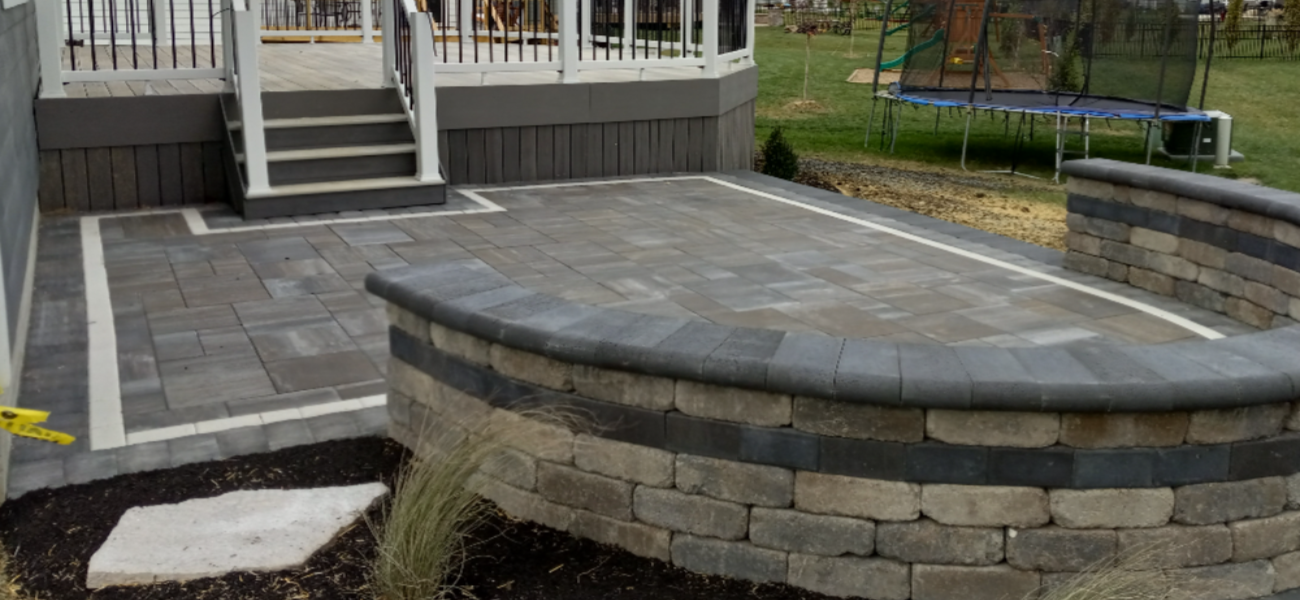
When the backyard drops away from the home, a raised patio can create a level “step-out” living space that feels connected to the house. A retaining wall supports the fill and base materials so the patio does not settle over time.
-
-
- Create a level entertaining area right outside the back door.
- Reduce erosion by stabilizing the transition from patio to yard.
- Make the space more usable for dining sets, grills, and seating layouts.
-
This is also a great time to plan other nearby upgrades, like adding a clean route to the gate with a walkway, or shaping adjacent areas for planting and lawn restoration.
2. Tiered outdoor living spaces
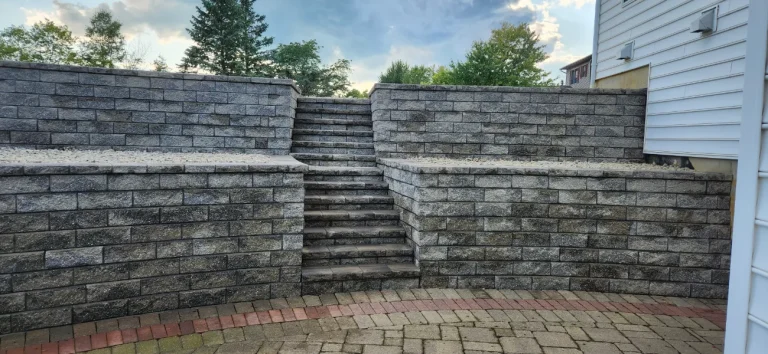
When the yard has a stronger grade change, one large patio may not make sense. A tiered design uses multiple walls and levels to create purpose-built zones that feel natural to move through.
-
-
- Separate spaces for dining, lounging, and play or gardening.
- Add visual depth without crowding the yard.
- Improve drainage control by managing runoff between levels.
-
Tiered spaces often pair well with surrounding planting, and we frequently finish them with trees, shrubs, and bushes to soften the hardscape and add privacy.
3. Built-in seating walls around gathering areas
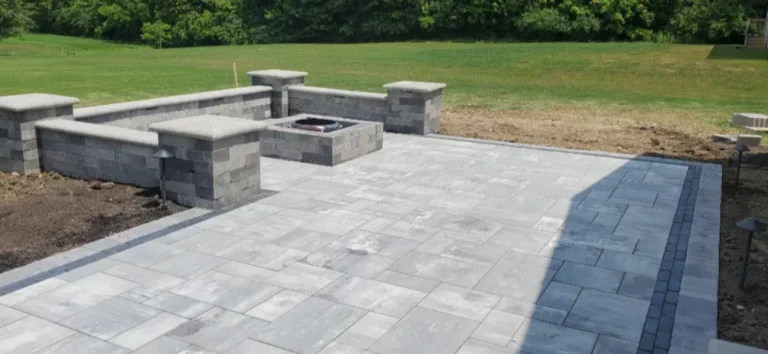
A low retaining wall can be designed at seating height, making it perfect for patios where you want extra room for guests without adding more furniture. This is especially useful around a fire pit or along the edge of a patio where you want a clean boundary.
-
-
- Save space in smaller backyards.
- Keep layouts open by reducing bulky chairs.
- Create a finished edge that also helps hold grade.
-
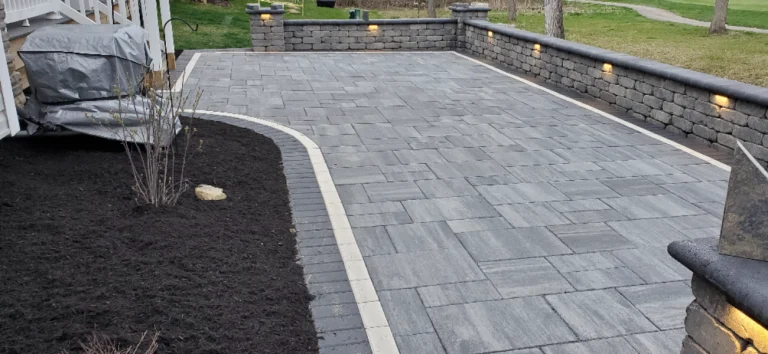
We often add lighting to seating walls so the patio feels usable and safe at night.
4. Retaining walls as backdrops for outdoor rooms
Even when the yard is mostly flat, a low wall can make a patio feel like an outdoor room. It frames the space and gives you options for integrated features.
-
-
- Define the patio boundary without fencing the yard.
- Create raised planting areas for cleaner landscaping lines.
- Add a sense of privacy when placed strategically.
-
This approach works especially well when paired with cohesive front yard landscaping or backyard landscaping so the entire property feels consistent.
5. Integrated steps and pathways
When walls and patios create multiple elevations, steps and paths need to feel safe and natural. Integrating steps into the wall design and connecting the space with a walkway keeps everything functional.
-
-
- Improve safety moving between levels.
- Connect zones like patios, gardens, and lawn areas.
- Add a more architectural look using complementary materials.
-
This is also a great time to address water movement between levels using drainage solutions so runoff does not undermine the base over time.
6. Garden terraces that stay put
If you want planting space on a slope, terraced garden beds are one of the cleanest solutions. Retaining walls keep soil where it belongs and allow for healthier planting conditions.
-
-
- Increase planting space without constantly fighting erosion.
- Improve drainage in beds compared to a steep hillside.
- Create a more finished look alongside the patio.
-
Terraces also pair nicely with low maintenance planting plans and thoughtful mulch lines, and they are much easier to maintain than a steep, washed-out slope.
By combining walls and patios intentionally, you solve grade problems and create usable outdoor space at the same time. If you are exploring options, the Landscape Visualizer is a great starting point. You can upload a photo of your yard and test layout ideas before committing to a final plan.
Design considerations for a cohesive look
The difference between a project that looks “added on” and one that looks like it belongs with the home comes down to design decisions made early. A wall and patio should feel like a matched set, not two separate projects that happen to touch.
Here are the considerations we focus on to keep the final result cohesive and durable.
1. Use complementary materials
Color, texture, and scale matter. Many homeowners love mixing styles, but the best combinations still share a common thread. Matching wall block and paver lines creates consistency and keeps the outdoor space from feeling busy.
-
-
- Color Coordination: Choose tones that work with siding, brick, trim, and roofing.
- Texture Matching: Pair tumbled looks with more traditional homes, and smoother styles with modern lines.
- Consistent Accents: Borders and caps can tie everything together, especially when used throughout the patio and wall design.
-
As an Authorized Unilock Contractor, we help homeowners select combinations that hold up in Ohio’s freeze thaw cycles and look great long term.
2. Plan for proper drainage
Drainage is not optional behind a retaining wall, and it is just as important under a patio base. Water pressure behind walls and saturated base materials are two of the biggest reasons hardscapes fail prematurely.
-
-
- Grading: Patios should be gently sloped away from the home.
- Wall Drainage: We incorporate gravel backfill and drainage pathways behind walls.
- Site Solutions: If needed, we integrate drainage solutions like drains, basins, or discharge lines to move water safely.
-
This is also where it helps to think beyond the patio itself. If the yard needs broader improvements, we may recommend coordinating the project with landscape design or a full backyard landscaping plan.
3. Incorporate lighting
Lighting makes patios more usable and makes steps and edges safer. It also elevates the entire look of the hardscape after dark.
-
-
- Improve Safety: Highlight steps, corners, and transitions.
- Extend Usability: Make the patio comfortable in the evening.
- Highlight Features: Accent walls, plantings, and focal points.
-
We commonly integrate landscape lighting into the overall layout so wiring is clean and the final look is polished.
4. Consider proportions and flow
A wall that is too tall for the patio footprint can feel heavy, and a patio that is too large for the yard can crowd everything else out. Scale matters just as much as materials.
-
-
- Scale Appropriately: Keep wall heights and patio sizes in proportion to the yard.
- Define Zones: Use walls to create separate areas without breaking flow.
- Ensure Accessibility: Plan steps, landings, and paths so the space feels natural to move through.
-
The Landscape Visualizer helps here too, because it lets you see scale and layout options before construction starts.
If you are considering a wall and patio combination, our team can help you plan it as one cohesive project, and coordinate the surrounding landscaping so the space looks finished. Many homeowners also choose to add supporting elements like refreshed beds, planting, or even yard clean ups ahead of the build so the entire area is ready.
Mini case study: from slope to stunning in Clearfield
A homeowner in Clearfield wanted a patio for entertaining, but their backyard sloped enough that furniture always felt unstable and water tended to run toward the house. They also wanted the space to look intentional, not like a patio dropped into the grass.
We evaluated the grade, planned water movement, and designed a retaining wall to create a level pad for a new paver patio. The wall was built to double as seating, and we incorporated lighting for safety and evening use. The final layout created a comfortable gathering space that felt connected to the home, and the grade and drainage improvements made the yard easier to maintain.
After completion, the family had a stable outdoor living area that looked finished and functioned the way they wanted.
Proudly serving Central Ohio
Double A Outdoor Living proudly serves homeowners in:
-
- Clearfield
- Marengo
- Johnstown
- Galena
- Sunbury
- Delaware
- Mount Gilead
- Surrounding towns in Knox, Morrow, Delaware, and Licking Counties
Let’s design a beautiful and functional outdoor space
Ready to combine beauty and structure in your backyard?
At Double A Outdoor Living, we design and build integrated patio and retaining wall projects that fit your property, your lifestyle, and Central Ohio weather. If you are not sure what layout makes sense, start with the Landscape Visualizer, then let our team turn that concept into a plan that will last.
Call us today or request an estimate online to get started on your project in Clearfield or the surrounding areas. We can also coordinate surrounding upgrades like landscape design, planting, front yard landscaping, and backyard landscaping so your entire outdoor space feels complete.