Protecting Your Home’s Foundation with Proper Grading
Water problems around a foundation rarely start in the basement. Most of the time, they start outside, with subtle grading issues that let rainwater and snowmelt sit against the home instead of draining away. In Marengo, that can mean soggy soil along the foundation line, damp basement smells, cracks that slowly widen, and hardscape surfaces that start shifting after a few freeze thaw seasons.
At Double A Ohio, we evaluate yards throughout Marengo and Central Ohio where the lawn’s slope is quietly working against the homeowner. Fixing grading and drainage early is one of the best ways to protect your foundation, and it also sets you up for successful front yard landscaping and backyard landscaping projects down the road.
Why properties in Marengo develop grading problems
Poor grading is usually not one single mistake. It is more often a combination of settlement, soil type, and day to day water sources that add up over time.
Common contributing factors include:
-
- Clay heavy soils that drain slowly and stay saturated longer
- Settlement around the foundation after the home is built
- Low spots created by years of foot traffic, pets, and mowing
- Downspouts dumping large volumes of water in the same area
Even a small dip near the foundation can trap water. Over a season of heavy rains, that moisture can build hydrostatic pressure against foundation walls, soften supporting soils, and create the kind of conditions that lead to cracks, leaks, and long term structural concerns.
How poor grading puts your foundation at risk
A healthy yard has a gentle, consistent fall away from the home, with water guided toward safe discharge areas. When the grade is flat, slopes toward the house, or funnels runoff into one corner, water starts behaving in predictable, damaging ways.
You may notice:
-
- Pooling along the foundation after storms
- Basement dampness, musty odors, or visible efflorescence on walls
- Mulch washing out of beds next to the house
- Soil erosion or sunken areas near basement window wells
Regrading is not just spreading topsoil. The goal is to reshape the surface so water flows consistently away from the home, and so it continues to flow that way after the soil settles and compacts. When grading is done correctly, it protects the foundation and it also protects nearby features like walkways, paver patios, and retaining walls.
The role of compacted soil and heavy clay
In many Marengo yards, the soil does not absorb water quickly. Clay holds moisture, and compaction makes it even worse. When the top layer is tight and dense, water has nowhere to go. Instead of soaking in, it runs across the surface and finds the lowest point, which is often right where you do not want it, at the foundation.
Signs you are dealing with compaction include:
-
- Water beading on the surface instead of infiltrating
- Thin grass, bare patches, or turf that never fully rebounds
- Soil that is hard to penetrate with a screwdriver or garden tool
Compaction can also undermine your landscape plans. If you are investing in new lawn installation, garden beds, or tree and shrub planting, the soil structure matters. The right fix often includes regrading, soil conditioning, and drainage that matches the way your yard actually behaves during a storm, not the way it looks on a sunny day.
Downspouts, sump discharge, and roof runoff
A huge percentage of foundation moisture problems come from roof water. A typical roof can shed thousands of gallons during a heavy rain. If that water is dumped beside the home, it will saturate the soil, find cracks, and increase pressure on foundation walls.
Common issues we see include:
-
- Short downspout extensions that discharge at the foundation bed
- Underground drain lines that are crushed, disconnected, or clogged
- Sump pump outlets that dump into the same low spot repeatedly
A professional evaluation looks at the whole system: where the water starts, where it travels, and where it should end up. That includes considering how roof runoff interacts with driveway slopes, neighboring runoff, and hard surfaces that can funnel water directly toward the home.
Professional grading and drainage solutions that work
Fixing foundation risk starts with identifying the root cause, not guessing. At Double A Ohio, we design drainage solutions that manage both surface flow and subsurface saturation, then we tie that plan into the landscape you want to live with.
Depending on the property, solutions may include:
-
- Regrading to create consistent fall away from the foundation
- Low spots correction so water cannot sit against the home
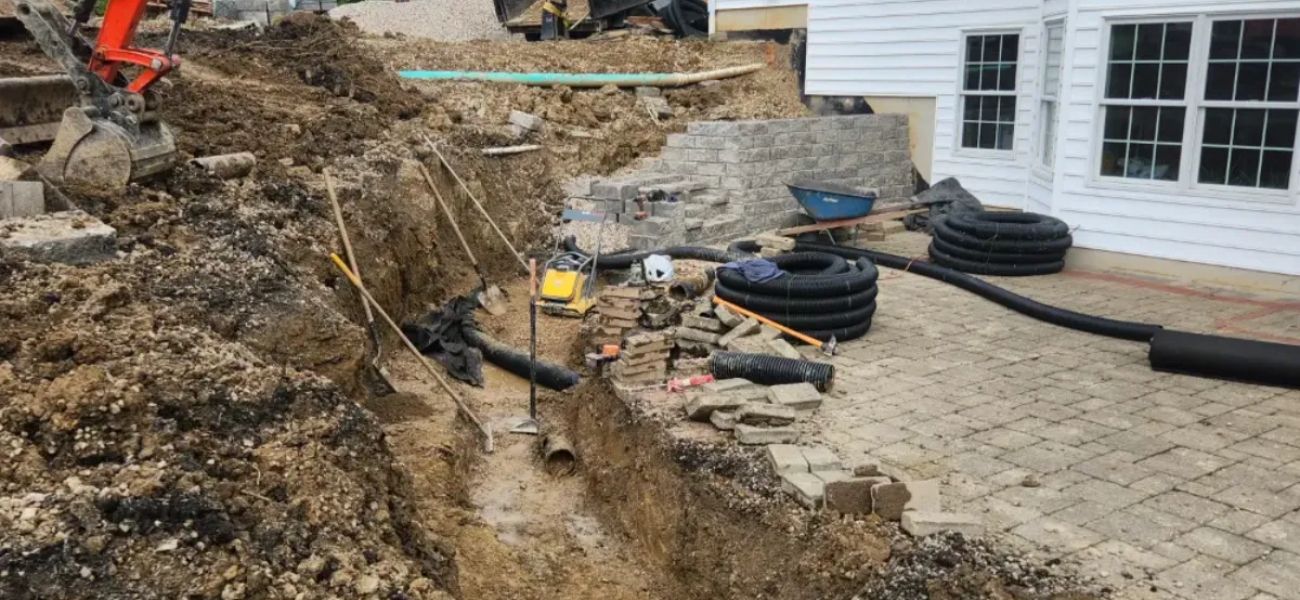
- French drains to collect and redirect subsurface water
- Catch basins and drain pipe to capture concentrated runoff
- Swales or dry creek beds that move surface water without looking like a trench
Drainage should never be installed blindly. Pipe depth, outlet location, soil type, and slope all matter. When the plan is right, it also supports bigger improvements like a pool installation area upgrade, a full landscape design, or a property wide outdoor living build.
If you are unsure what the finished project could look like, our landscape visualizer is a great way to explore layout ideas before any digging starts.
When hardscaping can help protect the foundation
Sometimes grading issues are tied to hard surfaces. Concrete and asphalt can shed water fast, and if the slope points toward the home, the foundation becomes the collection point.
Strategic hardscaping improvements may include:
-
- Rebuilding or reworking a walkway so it sheds water away from the house
- Installing a properly based paver patio with correct slope and edge restraint
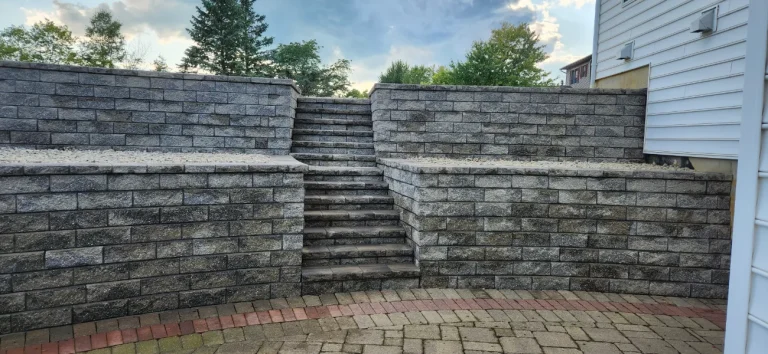
- Using a retaining wall to stabilize a grade transition and prevent washout
- Adding steps, landings, and transitions as part of a connected hardscaping installation
Good hardscaping is not just surface beauty. It is base prep, drainage planning, and long term performance. Done right, it reduces water problems instead of concentrating them.
Why temporary fixes usually fail
When homeowners see water near the foundation, the first instinct is often to add dirt, patch a low spot, or dig a quick channel. Those efforts can make the surface look better for a week, then the next storm exposes the real issue.
Common DIY mistakes include:
-
- Creating a reverse slope that sends water back toward the home
- Adding soil without compaction, which settles and recreates the low spot
- Installing pipe without a true outlet, proper pitch, or cleanouts
Foundation protection is not the place to experiment. A small grading mistake can turn into hidden moisture and expensive structural repairs. A professional plan is built around how water behaves across the entire lot, including roof runoff, neighboring runoff, and soil saturation.
Budget planning for grading and foundation protection
Costs vary based on access, the amount of reshaping required, and whether drainage infrastructure is needed. The biggest pricing swings usually come from how much soil has to move, and how complex the discharge routing is.
Cost factors include:
-
- Excavation, reshaping, and haul off requirements
- Drain depth, pipe runs, and outlet location
- Restoration work like seed, straw, or sod after grading
- Integration with upgrades like garden beds, planting, or a patio rebuild
For realistic planning ranges, start with our Landscape Pricing Guide. If your project includes patios, walls, steps, or other structural features, we will also walk you through hardscape cost ranges during the design process, especially when the work falls under broader hardscaping installations.
Common homeowner questions
Homeowners around Marengo often ask:
-
- Can I just add topsoil around the foundation? Sometimes, but only if it is shaped and compacted correctly, and only if runoff sources are addressed.
- Do I always need a French drain? No. Some properties need regrading and downspout routing, others need subsurface drainage too.
- Will grading affect my landscaping? It can, which is why we plan grading alongside front yard landscaping and backyard landscaping so the finished yard looks intentional.
- What about lighting and outdoor living areas? We often combine drainage work with upgrades like landscape lighting, a fire pit, or even outdoor kitchen construction once the site is stable and dry.
Case study: stopping water at the foundation in Marengo
A homeowner in Marengo reached out after repeated puddling along one side of the house, plus damp basement smells during spring rain. The yard looked mostly flat, but the grade was subtly pitched toward the foundation, and two downspouts were discharging into the same low area.
Our solution combined surface and subsurface corrections. We regraded the affected side to establish consistent fall away from the home, routed roof runoff to a better discharge location, and added targeted drainage to keep the soil from staying saturated. Once the water behavior was corrected, we restored the area and tied the new grade into the existing landscape, with room for future upgrades like refreshed beds and planting.
The result was simple, water moved away from the home, the problem area dried out faster, and the foundation line stopped acting like a collection point.
Long term benefits of fixing grading the right way
When grading and drainage are corrected professionally, homeowners see benefits that go beyond “no more puddles.”
You can expect:
-
- Reduced risk of cracks, leaks, and basement moisture
- Healthier turf and easier property maintenance because the yard is not constantly muddy
- Better performance from hardscapes like patios and walkways
- More reliable planting areas for trees, privacy hedges, and beds
Once the foundation is protected, you can invest with confidence in projects like composite deck construction, a gazebo or pergola, and full outdoor living layouts planned with the visualizer.
Why choose Double A Ohio
Foundation related water issues require more than a quick grade touch up. They require a plan that respects soil behavior, runoff sources, and long term performance.
Homeowners across Central Ohio choose Double A Ohio because:
-
- We are a locally owned, full service landscaping and hardscaping company
- We specialize in drainage and grading that supports the entire property
- We build integrated solutions that connect with patios, walls, lighting, planting, and lawn work
- We help homeowners plan projects realistically through our pricing guidance
- We can support ongoing upkeep with services like hedge and bush trimming, seasonal cleanups, and even acreage work like brush clearing
Our goal is permanent correction, not temporary patchwork.
Serving Central Ohio communities
Double A Ohio proudly provides grading, drainage, landscaping, and hardscaping services in:
-
- Marengo
- Johnstown
- Galena
- Sunbury
- Delaware
- Mount Gilead
- Surrounding areas in Knox County, Morrow County, Delaware County, and nearby communities
As a local company, we understand how Central Ohio soil and seasonal weather affect drainage, settlement, and long term yard performance.
Schedule your grading and drainage evaluation today
Protect your foundation with professional grading and drainage from Double A Ohio
If you are seeing water near your foundation in Marengo, do not wait for it to become a basement problem or a structural repair. A proper evaluation can identify why water is collecting, where it is coming from, and what combination of grading and drainage solutions will fix it for good.
Call Double A Ohio today or request an estimate online to schedule your consultation. If you are also planning a bigger outdoor upgrade, we can help you visualize the end result with our landscape visualizer and design a plan that ties grading into a complete front yard or backyard transformation.