The Importance of Proper Lawn Grading and Drainage
Many homeowners do not realize how much of their “lawn problem” is really a water problem. If water is moving the wrong way, or not moving at all, you will see it everywhere: thin turf that never fills in, muddy low spots, mulch that washes out, patios that settle, and damp areas along the foundation that make you nervous every time it rains.
At Double A Ohio, we provide professional grading and drainage solutions for homeowners throughout Marengo and surrounding Central Ohio communities. This post breaks down what grading actually is, why drainage matters just as much, how to spot warning signs early, and how we fix water issues in a way that supports everything else you want to do outside, from a healthier lawn to a full backyard landscaping upgrade.
What is lawn grading?
Lawn grading is the process of reshaping the surface of your yard so it has a consistent, intentional slope that directs water away from critical areas like your home’s foundation, patios, walkways, and driveway edges. It is not about making your yard perfectly flat. It is about creating predictable flow so rain and snowmelt do not collect where they can cause damage.
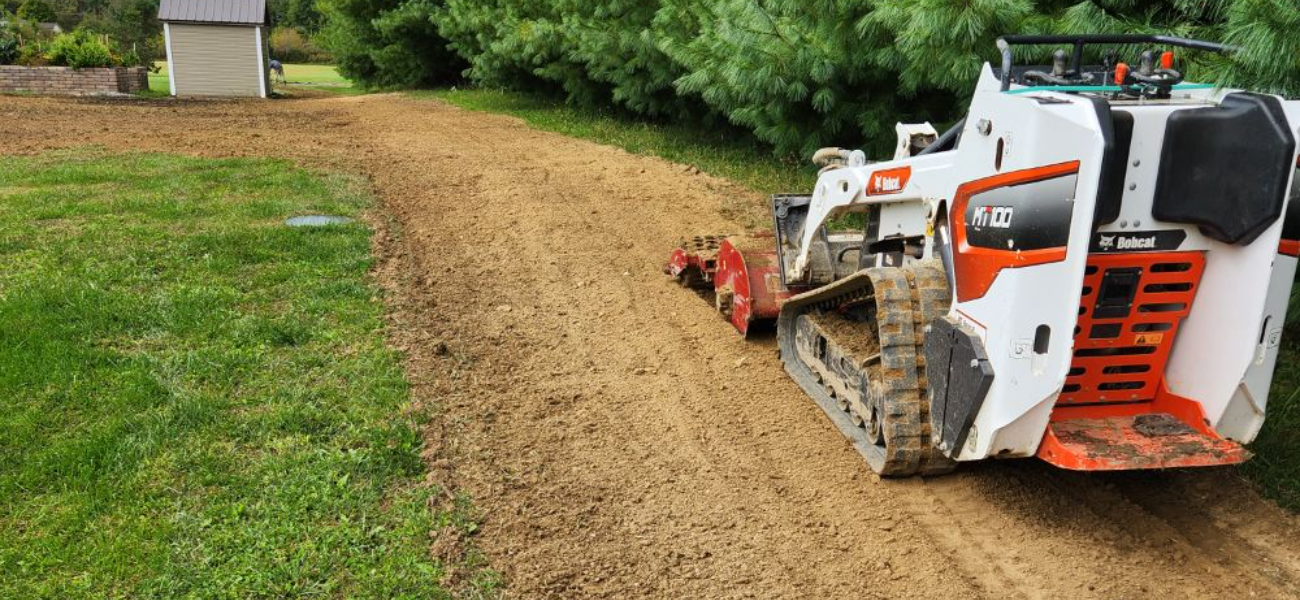
Grading is often part of larger projects like new lawn installation, major landscape renovations, and fixes for recurring puddling or erosion. It typically involves cutting down high areas, filling low spots, blending transitions, and establishing the right slope so water moves toward a safe discharge point.
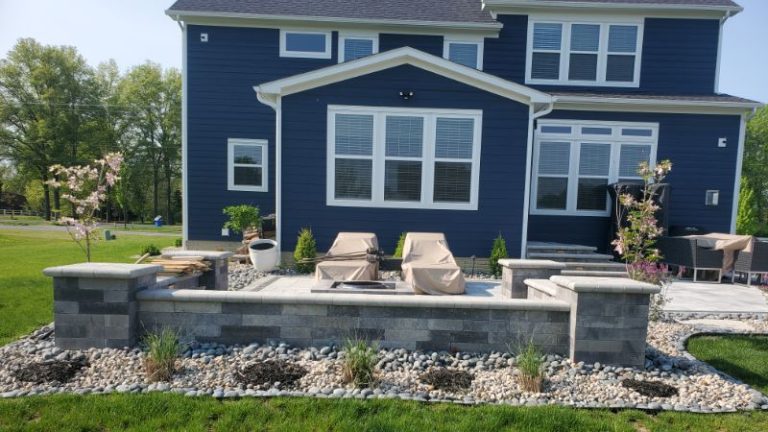
At Double A Ohio, we treat grading as the foundation of the entire landscape. If you plan to build a paver patio, install a walkway, add garden beds, or invest in new planting, the grade underneath determines how well those improvements hold up over time.
Why proper grading matters
A well-graded yard does more than “look tidy.” It protects your home and makes your lawn easier to maintain. It also prevents you from spending money on improvements that fail because the water problems never got solved.
-
- Prevents water from pooling near your foundation
If the ground near your house pitches the wrong way, water can sit against the foundation after storms and snowmelt. Over time, that increases the risk of moisture intrusion and long-term damage. Proper grading helps move water away before it becomes a recurring headache. - Reduces erosion and washout on slopes and bed edges
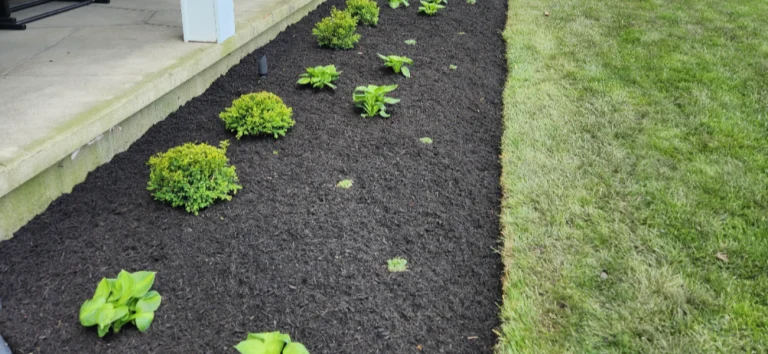
Runoff on a slope can strip away topsoil, expose roots, and carve channels through mulch beds. Grading and shaping the yard controls flow so you are not constantly re-mulching, re-edging, or replanting after heavy rain. - Creates a stable base for patios, walkways, and walls
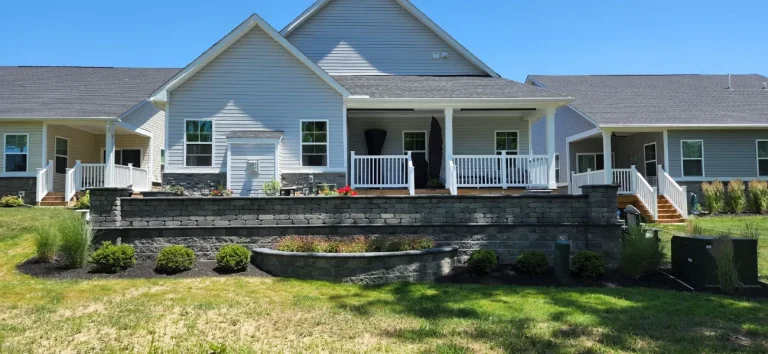
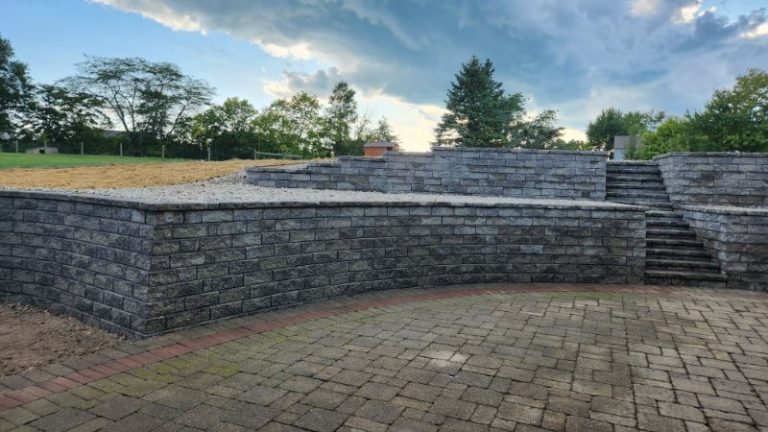
Hardscape features rely on a stable subgrade. Poor grade leads to settling and shifting, even when the surface looks fine at first. If you are planning hardscaping installations like patios and paths, or structural work like retaining wall construction, grading is the first step to long-term performance. - Supports healthier turf growth
Low areas stay too wet and high areas dry out. That uneven moisture shows up as patchy turf and disease pressure. Proper grading balances the lawn so water absorbs more evenly and grass roots are not constantly stressed. - Helps avoid standing water and mosquito breeding zones
Puddles are not just ugly, they create slippery spots and invite mosquitoes. Grading eliminates the dips that hold water in place, which improves usability and overall comfort in the yard.
- Prevents water from pooling near your foundation
Long-term impact
When grading is wrong, everything built on top of it becomes harder. Homeowners often try to fix symptoms first: new seed, more soil, more mulch, a new bed edge, maybe even a small patio repair. If the water still moves the same way, the problem comes back.
You might notice patterns like these:
-
- Grass that dies off in the same soggy area every spring
- Mulch that washes into the lawn or onto the sidewalk after storms
- A patio edge that keeps settling because the area stays saturated
- Downspout discharge that turns one area into a muddy mess
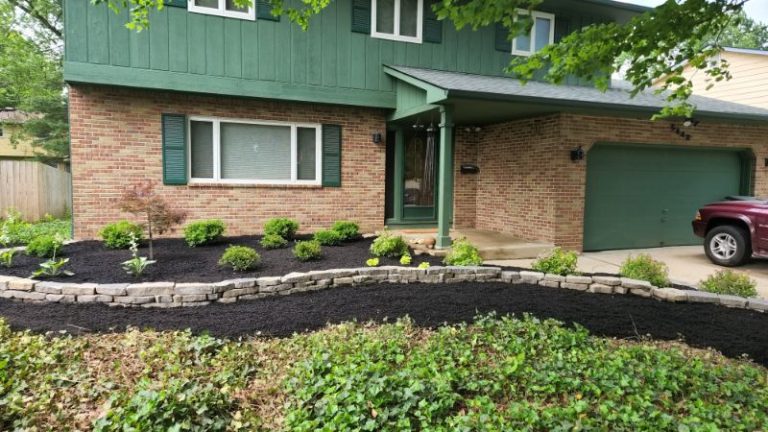
Fixing grade issues early protects your investment in everything else, whether that is a clean front yard landscaping refresh for curb appeal, a complete backyard landscaping transformation, or a new outdoor living space with pavers, lighting, and planting.
If you want to see how grading, drainage, and new features can work together in a cohesive plan, our Landscape Visualizer is a great way to explore layout ideas before committing to a build.
Why drainage is just as important
Grading shapes surface flow, but drainage controls what happens when water needs more help than slope alone can provide. In Central Ohio, heavy storms, clay-heavy soil, compacted yards, and snowmelt can overwhelm the natural ability of the ground to absorb water. That is when water sits, moves sideways, or pushes against structures.
That is why drainage systems and grading should be treated as a single water management strategy, not two separate projects. At Double A Ohio, we evaluate both surface grading and subsurface movement so we can stop the problem at its source instead of chasing puddles around the yard.
When grading isn’t enough
Even with a good slope, you can still have issues if your property has any of the following:
-
- Clay-heavy or slow-draining soil
- Runoff entering your yard from neighboring lots or the street
- Downspouts dumping too close to the foundation or into low areas
- Compacted ground from years of mowing and traffic
- Storms that exceed the soil’s ability to infiltrate water
In those situations, drainage features capture and redirect water so it does not linger. Done right, drainage is not a patch. It is infrastructure that supports lawns, planting beds, and hardscapes long-term.
Tailored drainage solutions from Double A Ohio
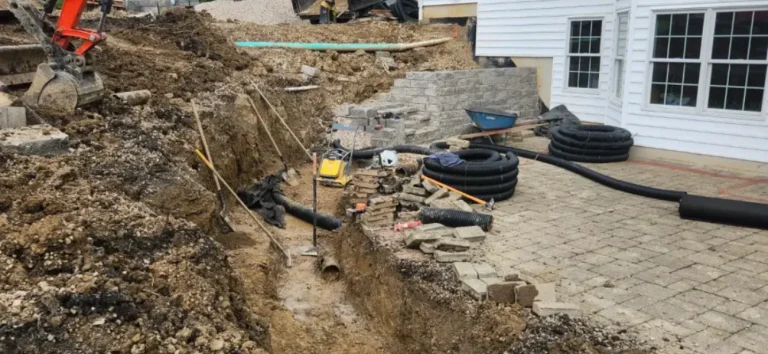
We install drainage solutions that match the specific issue on the property, and we build them to blend into the yard. Some systems are meant to move subsurface water away from a soggy area, others capture surface runoff in a low spot, and others manage concentrated roof runoff from gutters and downspouts.
The right solution depends on the grade, soil, discharge options, and what else is happening in the landscape.
Types of drainage systems we install:
-
- French drains
A gravel-filled trench with a perforated pipe designed to collect and move subsurface water away from problem areas. This is a common fix for soggy lawns and foundation-adjacent wet zones. - Catch basins
Installed at low points to collect surface water, then route it into underground piping. This is especially helpful near driveways, downspout areas, and places where water funnels during storms. - Channel drains
A great option for hard surfaces such as patios, pool areas, and walkways where sheet flow needs to be captured quickly to avoid slick conditions and washout. - Downspout extensions
Simple, high-impact fixes that move roof runoff away from the home. We can bury these lines for a cleaner look and connect them into a larger drainage system when needed. - Dry creek beds
A natural-looking solution that guides water through the landscape during heavy rain. Dry creek beds can also reduce erosion, add texture, and complement planting designs near garden beds. - Grading with swales
Shallow channels that direct water along the natural contours of the yard. Swales are often used when you need to move water without relying entirely on pipe systems.
- French drains
Customized for your property
No two yards in Marengo are identical, and water issues rarely have a one-size answer. We design systems around:
-
- Soil type and compaction level
- Existing slope, settlement, and low spots
- Foundation location, driveway edges, and hardscape elevations
- How you want to use the yard, including patios, walkways, and outdoor living features
- Whether the project includes structural needs like retaining walls on slopes
We also look at how drainage will interact with the rest of the landscape plan. For example, if you are adding planting through planting trees, shrubs, and bushes, building low-maintenance areas with xeriscaping, or upgrading usability with landscape lighting, we ensure the water plan supports those improvements instead of working against them.
If you are budgeting for a larger project that includes both water correction and outdoor upgrades, the Landscape Pricing Guide and Hardscape Pricing Guide can help you set realistic planning ranges.
Our approach to grading and drainage
At Double A Ohio, we do not guess. We trace the water, identify why it is collecting or flowing in the wrong direction, then build a plan that solves the root cause. The goal is a yard that drains properly, supports healthy turf, and provides a stable base for every other improvement.
If a homeowner is also planning bigger changes, like landscape design work, an outdoor living area, or even features like outdoor kitchens or gazebos and pergolas, we coordinate the grading and drainage first so those additions are built on a stable, dry foundation.
Here’s what you can expect when working with us:
-
- Site evaluation: We identify pooling areas, measure slope, look at soil conditions, and review where water is coming from, including roof runoff and neighboring flow.
- Precision grading: We reshape the surface for consistent flow and stable transitions, especially around foundations, patios, and walkway routes.
- Drainage design: We recommend the most effective combination of French drains, basins, swales, and discharge planning, based on the property’s needs.
- Integration with landscaping: We blend systems into the landscape so the end result looks intentional, not patched together. That can include retaining walls, refreshed beds, planting, or new turf through new lawn installation.
- Professional cleanup and restoration: Once the water infrastructure is installed, we restore disturbed areas and leave the site clean and usable. If the yard needs prep or cleanup before work begins, we can coordinate yard clean ups and brush clearing.
DIY grading and drainage is where we see a lot of costly mistakes: shallow trenches that clog, buried outlets that never discharge, added soil that creates new low spots, and “fixes” that accidentally push water toward the house. Water management is one of those projects where professional design and installation saves money over time because you are not rebuilding the same area every year.
Proudly serving Central Ohio
Double A Ohio provides lawn grading, drainage solutions, and full-service landscaping throughout:
-
- Marengo
- Sunbury
- Galena
- Johnstown
- Mount Gilead
- Delaware
- Surrounding areas in Knox, Delaware, and Morrow Counties
We also provide complete outdoor upgrades, including hardscaping installations, paver patios, walkways, retaining walls, landscape lighting, and planning support for front yard landscaping and backyard landscaping.
Take control of water problems before they get worse
Get expert grading and drainage help from Double A Ohio
If you are seeing soggy areas, erosion, pooling near your foundation, or you are planning a new outdoor project, now is the time to address grading and drainage the right way. Once water movement is corrected, everything else becomes easier: your lawn performs better, your beds hold their shape, and your hardscapes stay stable.
Contact us today to request an estimate or schedule a site consultation. If you want to start planning visually, try our Landscape Visualizer and explore how grading, drainage, and a complete outdoor plan can come together for your Marengo property.