Understanding the Importance of Geogrid in Wall Construction
Geogrid is a high-strength polymer mesh that gets installed in layers within the soil zone behind a retaining wall. You never see it once the project is finished, but it is one of the most important parts of a wall that is expected to stay straight, stable, and safe for years. In simple terms, geogrid ties the wall and the soil together so the wall is not acting alone against soil pressure.
In Central Ohio, geogrid is especially important on taller walls, walls built into slopes, and walls that support additional features like steps, patios, or terraced garden beds. If the soil behind the wall shifts, gets saturated, or freezes and expands, the wall needs reinforcement to resist that force instead of gradually leaning forward.
Why geogrid matters in retaining wall construction
From the outside, a retaining wall can look like a neat stack of block or boulders. What homeowners do not see is the engineering below grade and behind the wall. That hidden structure, excavation depth, base compaction, drainage, and reinforcement, is what separates a wall that lasts from a wall that starts to bulge after a few seasons.
Geogrid reinforcement is one of the main tools we use to build walls that hold their shape long term, especially when paired with correct grading and drainage solutions.
Reinforces the wall from within
Geogrid works like a series of anchors extending back into the retained soil. As the soil presses forward, the grid distributes that force into a larger reinforced zone, reducing stress on the wall face.
-
- Spreads soil pressure across a wider area instead of concentrating it on the wall blocks
- Helps prevent bowing, leaning, and separation at joints over time
- Creates a stronger foundation for future upgrades like steps, patios, and terraced planting areas
This matters in Central Ohio because wet clay soils, spring rains, and freeze thaw cycles can all increase pressure behind a wall. When we design and build a wall, we look at how water moves through the yard and how the wall ties into surrounding features like backyard landscaping, front yard landscaping, and drainage improvements so the entire system performs together.
Enables safe construction of taller walls
As walls get taller, the forces behind them increase quickly. That is why taller walls often require a more engineered approach. Geogrid is a common reinforcement method because it allows the wall to resist greater soil loads while keeping the footprint and design flexible.
With geogrid reinforcement, we can safely build options such as:
-
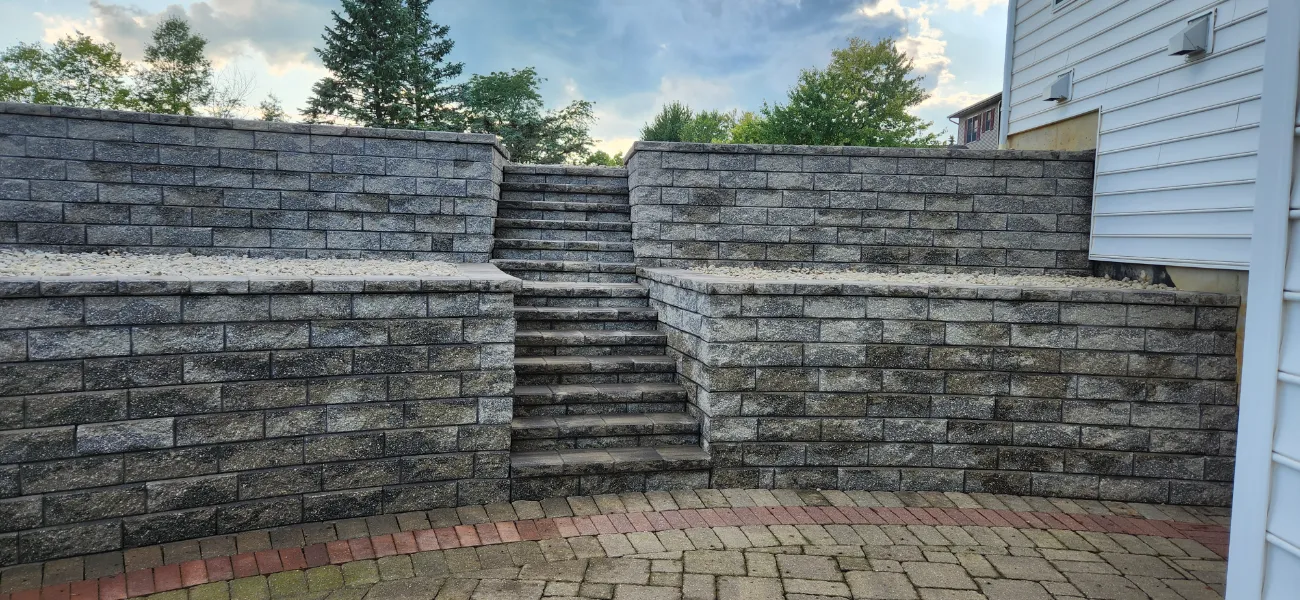
- Tiered or terraced retaining wall systems that make sloped yards usable
- Raised planting areas and structured garden beds that do not wash out
- Level pads for outdoor living, including paver patios, seating areas, and fire pits
In many projects, the retaining wall is not the end goal. It is what makes the rest of the landscape possible, including connecting spaces with a walkway, improving usability with landscape lighting, and planning a clean, cohesive layout through landscape design.
Minimizes future maintenance and reduces failure risk
Geogrid is not just about “making it stronger.” It also reduces the chances of the slow, expensive problems that show up later: leaning walls, cracking caps, sinking edges, and patios that shift because the supporting soil moves.
By reinforcing with geogrid, homeowners benefit from:
-
- Better long-term performance when paired with drainage and proper backfill
- Less risk of movement that can damage nearby patios, steps, or walkways
- A longer service life for the wall and the surrounding landscape
- Fewer surprises that force you to redo planting, lighting, or nearby hardscaping
When we build walls, we also think about the full property. That might include coordinating planting with tree and shrub planting, reducing maintenance with xeriscaping, or cleaning up and preparing the site through yard clean ups and brush clearing before construction starts.
When geogrid is required and what materials work best
Not every retaining wall needs geogrid. A short decorative border wall in a flat bed is different from a wall holding back a slope or supporting a raised patio area. The decision depends on wall height, soil conditions, slope, drainage, and what loads exist above the wall.
At Double A Ohio, we evaluate each site and design the wall based on what the property actually needs, not a one-size approach.
Common scenarios where geogrid is needed
Geogrid is especially important in these situations:
-
- Walls over 3 to 4 feet tall
As height increases, reinforcement and a more engineered build become much more important for long-term stability. - Walls built into slopes or uneven terrain
Sloped sites can introduce additional pressure and water movement behind the wall. - Clay-heavy or saturated soils
Many Central Ohio properties have soils that hold moisture. When soil stays wet, it weighs more and pushes harder on the wall. - Terraced and multi-tier systems
Multiple levels can create complex load paths and drainage needs that benefit from reinforcement. - Extra loads above the wall
If the wall supports a driveway edge, shed area, stair landing, or a paver patio, reinforcement helps distribute those forces safely.
- Walls over 3 to 4 feet tall
If you are not sure what your wall requires, that is exactly where a professional evaluation helps. The goal is to build the right wall once, rather than rebuilding after movement starts.
Materials we use in geogrid-reinforced wall systems
Geogrid works best when it is paired with a wall system designed to accept it and a base built to proper standards. Material choice depends on aesthetics, site conditions, and budget, but these are the common options we build with:
-
- Segmental retaining wall block
Engineered block systems are designed to interlock and work with geogrid layers, making them a strong choice for clean lines and consistent finishes. - Natural stone
Stone can deliver a more organic look. Reinforcement and drainage are planned behind the scenes so the wall performs while maintaining that natural aesthetic. - Boulder retaining walls
Boulder walls can work well in larger properties or where a rugged, natural look fits the setting. When conditions call for it, reinforcement and proper backfill techniques help improve stability.
- Segmental retaining wall block
To help homeowners visualize options, many people start with the Landscape Visualizer. It is a practical way to explore wall styles, patio layouts, and how the finished space could connect to a broader backyard landscaping plan.
Building walls that last from the ground up
A retaining wall is only as strong as its base, backfill, drainage, and reinforcement plan. That is why we focus on the parts homeowners never see, including excavation depth, compacted aggregate base, drainage stone, and correct geogrid placement and overlap.
We also plan how the wall ties into surrounding work, which might include:
-
- Creating a level pad for a paver patio or seating area
- Connecting levels with steps and a walkway
- Finishing the space with landscape lighting and planting
- Completing the surrounding landscape through landscaping services such as beds, mulch, and lawn restoration
If you are replacing a failing wall, we also look at what caused the failure. In many cases, the problem is not “bad blocks.” It is poor drainage, inadequate base prep, and no reinforcement where reinforcement was needed.
Local expertise matters
Retaining wall failures are often predictable. A wall that is leaning, bulging, or cracking usually shows signs that water and soil pressure are winning. In Central Ohio, local soil conditions, heavy spring rains, and freeze thaw cycles all increase the stakes.
As a local contractor serving Marengo and surrounding communities, Double A Ohio designs walls for real site conditions, not ideal ones. We plan drainage, build proper bases, and use geogrid reinforcement when the situation calls for it.
Proudly serving Central Ohio
Double A Ohio provides retaining wall construction and full landscape and hardscape services throughout Central Ohio, including:
-
- Marengo
- Sunbury
- Galena
- Johnstown
- Mount Gilead
- Delaware
- Surrounding communities in Knox County
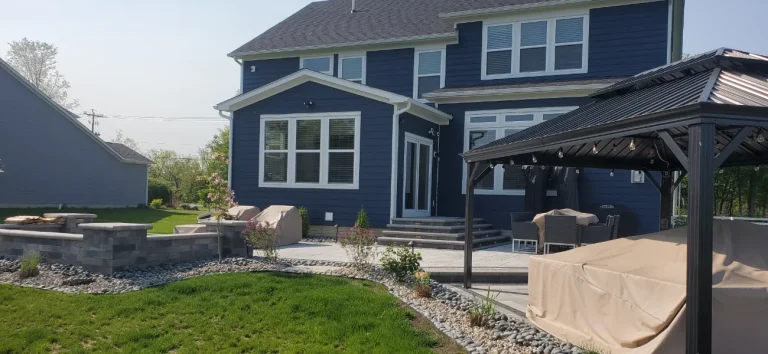
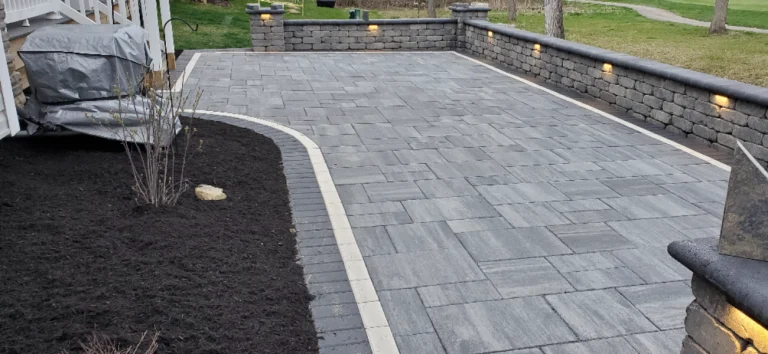
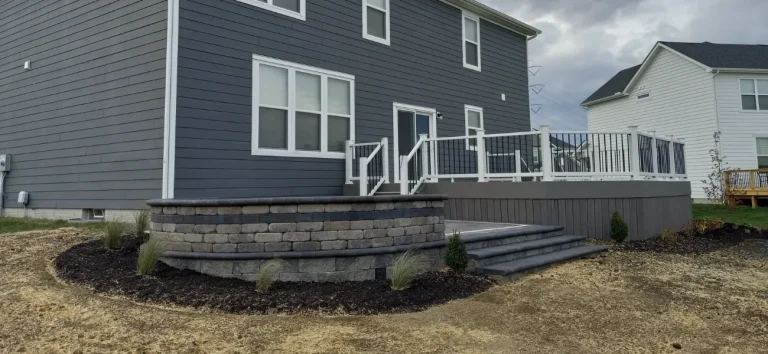
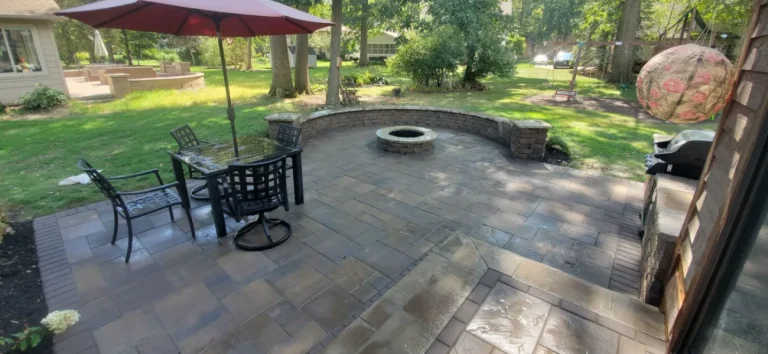
If you want to see how walls, patios, planting, and lighting come together on real projects, you can also browse the project gallery for examples across the region.
Ready for a stronger, longer-lasting retaining wall?
Let’s build it right the first time
If you are dealing with a slope, planning a terraced yard, or replacing a wall that is starting to lean, a professional evaluation can save you from expensive rework later. We can assess your site, explain whether geogrid is needed, and design a wall that is engineered for long-term performance.
Call Double A Ohio today or request your estimate online. We serve Central Ohio homeowners with expert retaining wall construction, hardscaping installations, drainage solutions, and complete yard transformations, including front yard landscaping and backyard landscaping.