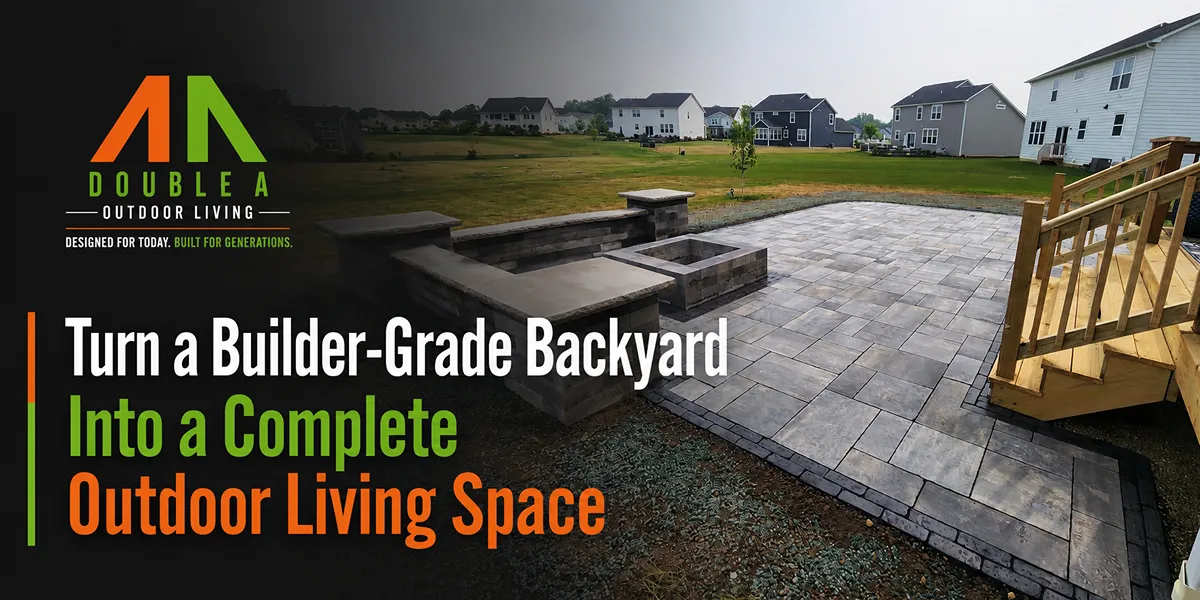
Turn a Builder-Grade Backyard Into a Complete Outdoor Living Space
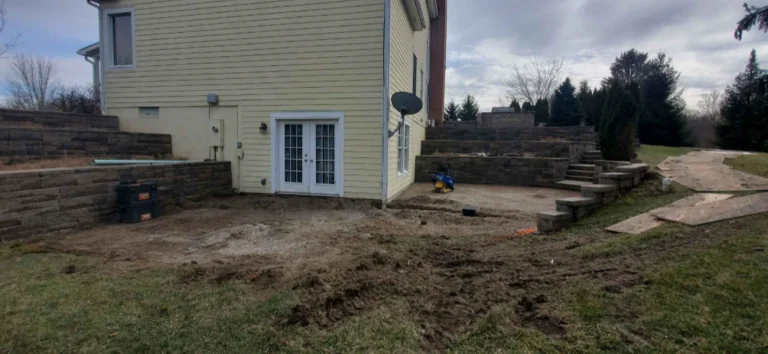
You bought the new house for a reason. You loved the kitchen, the open floor plan, the extra space and the neighborhood. Then you walked out the back door and found a patch of grass, a small builder-grade wood deck or landing with stairs, and a wide-open view into your neighbors' backyards.
That's a familiar situation for homeowners throughout Johnstown, Sunbury, Galena, Delaware, Lewis Center and other growing communities north and northeast of Columbus. New homes are going up quickly, but the outdoor spaces that come with them are often just a starting point.
The opportunity is that you aren't stuck working around an old landscape or somebody else's outdoor design. A relatively blank backyard gives you the chance to plan the space properly from the beginning. A larger custom deck, paver patio, privacy improvements, landscaping, fire features, seating and shade can all be designed around how you actually want to use your backyard.
For many homeowners, that's when the backyard finally starts to feel like part of the home rather than simply the space behind it.
New Homes Are Changing the Landscape North of Columbus
Central Ohio has experienced tremendous residential growth, particularly throughout Delaware County and communities along and near the State Route 161 corridor. The enormous investment surrounding Intel's semiconductor manufacturing development near New Albany has added even more attention and development pressure to an area that was already growing quickly.
That growth extends well beyond one development. New neighborhoods continue to expand throughout Johnstown, Sunbury, Galena, Delaware, Lewis Center and surrounding North Columbus communities, putting thousands of homeowners into a very similar situation.
The house may be brand new, but the backyard is often unfinished from an outdoor-living standpoint.
There may be lawn and basic grading. There may be a few young plants. There may be a small pressure-treated deck or landing off the rear door. What is usually missing is a comfortable place to actually spend time outside.
For homeowners who plan on staying in the house, the backyard often becomes one of the next major projects after moving in.


The Typical Builder-Grade Backyard Is a Starting Point
There is nothing inherently wrong with a basic builder-installed landscape. Its job is to finish the home and provide a functional yard. It isn't necessarily intended to be the outdoor space your family will use for the next 10 or 20 years.
That's why we often look at these yards as blank slates.
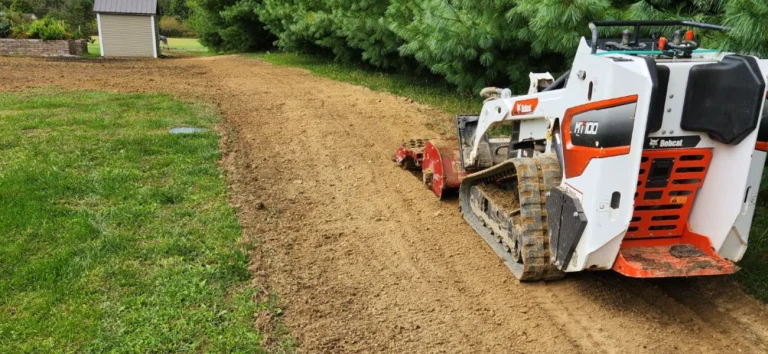
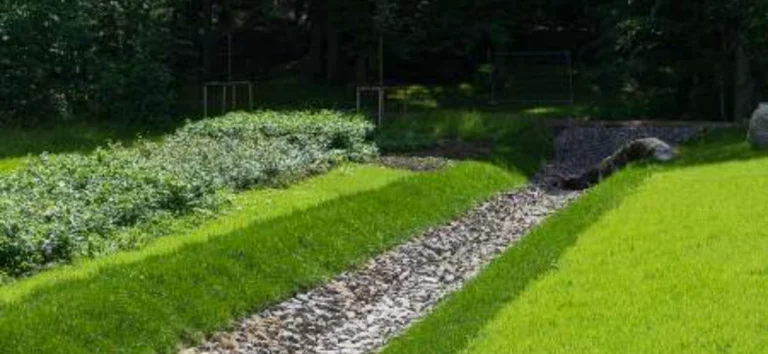
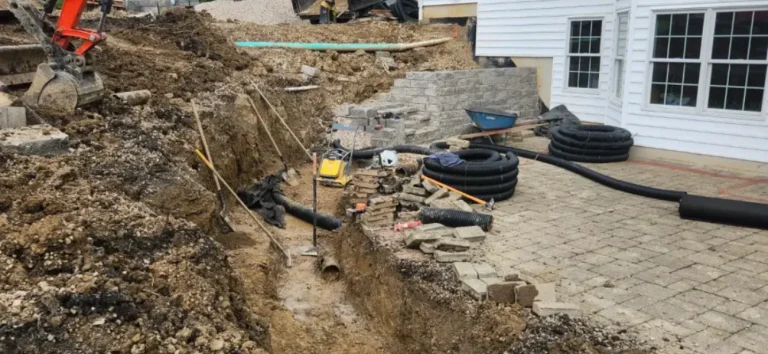
Instead of asking how to improve one small part of the yard, we can look at the entire property and ask better questions. Where should people gather? How should you move between the house and yard? Do you need a deck because of the elevation of the back door, or would a patio make better use of the available space? Where are the neighboring sightlines? Where does the afternoon sun hit? Is there room for a fire feature or covered area? What needs to happen with drainage before anything is built?
Those decisions determine whether the finished project feels like several features added to a backyard or one cohesive outdoor living space.
That Little Wood Deck Doesn't Have to Define the Backyard
One feature we see frequently on newer homes is a small pressure-treated wood deck or landing with stairs leading to the lawn. It provides access to the backyard, but it may not provide enough room for a dining table, grill, furniture and the people who actually want to use the space.
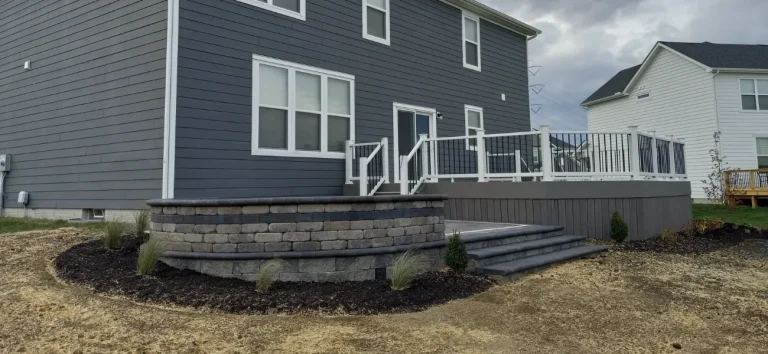
For some homes, replacing that basic structure with a larger composite deck makes sense. A properly sized deck can create a comfortable transition directly from the house and give you an elevated outdoor area for dining, grilling or relaxing.
On other properties, a custom paver patio may provide more usable space at ground level. And on homes where the grade and budget allow it, a deck and patio can work together to create two distinct outdoor areas.
The important decision isn't simply whether the existing deck is too small. It's determining what should replace it based on how the entire backyard will eventually function.
Privacy Matters in New Construction Neighborhoods
A wide-open backyard can feel even more exposed in a newer subdivision.
Homes are often positioned relatively close together, landscaping is still young, and there may be very little mature vegetation between properties. Even with a reasonable amount of space between homes, second-story windows and elevated decks can create direct sightlines from one backyard into another.
You can have a beautiful new patio and still find yourself reluctant to use it if you feel like you're sitting in the middle of the neighborhood.
That's why privacy should be considered when the overall backyard is being planned, rather than treated as a separate project after everything else is finished.
Depending on the property, the design might incorporate privacy fencing, strategically placed trees and evergreens, low-maintenance shrubs, layered landscape beds, a pergola or pavilion, seat walls or even the orientation of the patio itself.
There isn't one privacy solution that works for every property. The goal is to create enough separation that the backyard feels comfortable without making it feel closed in.
You Don't Need to Know Exactly What You Want Before You Start
One of the most common misconceptions about planning a larger backyard project is that you need to have everything figured out before contacting a contractor.
You don't.
Some homeowners come to us knowing they want a patio. Others know they need more privacy. Some want a better deck. And plenty simply look at the backyard and think, "We know we want something better, but we don't know what to do with it."
That's where the planning process becomes valuable.
At Double A Outdoor Living, we look at the property as a whole and talk about how you want to use it. That includes the practical parts of the project as well as the features you're excited about.
We consider things such as:
-
- How many people normally use the space
- Whether you regularly entertain friends or extended family
- How the back door connects to the yard
- Existing grade and elevation changes
- Drainage and water movement
- Views into and out of neighboring properties
- Sun exposure and the need for shade
- Kids and pets
- How much landscape maintenance you want
- Features you would like to include now or in the future
- The overall investment you're comfortable making
From there, the individual pieces start to make sense.
What Can a Complete New Construction Backyard Include?
A complete backyard transformation doesn't mean filling every square foot with hardscape or adding every outdoor feature available. The best projects prioritize the features that will make the biggest difference in how you use the property.
For many new-construction homeowners around Johnstown, Sunbury and Delaware County, that starts with a substantial patio or deck and then adds one or two major features alongside the landscaping.
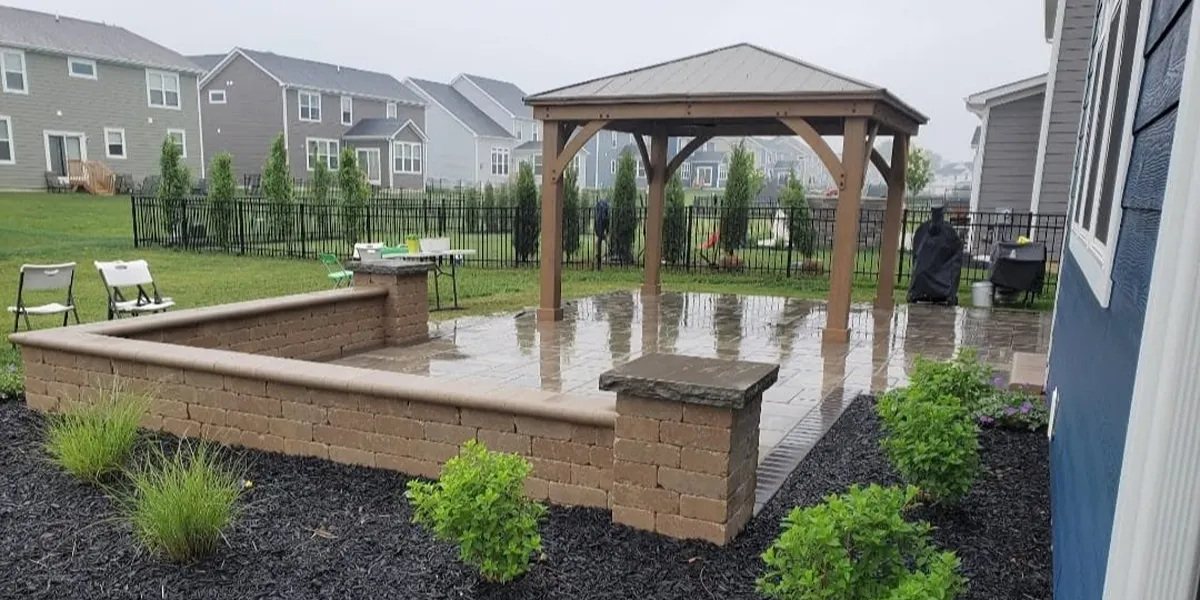
A Larger Paver Patio
A paver patio can become the primary gathering area in a backyard, with enough room for dining, outdoor furniture, a grill and circulation between each part of the space.
For planning purposes, a substantial patio project may be around the $17,000 range, although size, paver selection, site access, excavation, grade and other conditions can move the final investment in either direction.
More important than simply making the patio large is getting its proportions and location right. A patio should feel connected to the house, landscaping and the rest of the yard rather than looking like a rectangle of pavers dropped into the lawn.
A Custom Deck
For homes with an elevated rear entrance, a custom deck may provide the most natural connection between the house and backyard.
Instead of the small builder-installed platform and stairs, the new deck can be sized around dining, grilling, furniture and circulation. Composite decking can also significantly reduce the ongoing maintenance compared with traditional exposed wood decking.
A substantial custom deck might represent an investment of approximately $25,000, depending on size, materials, elevation, stairs, railing and complexity.
Fire Features and Seat Walls
Once the main gathering area has been established, features can make the space more comfortable and give it character.
A built-in fire feature creates a natural focal point, while seat walls and landscape walls can define the patio and provide additional seating without filling the space with more furniture.
These features work particularly well when they're designed with the patio from the beginning rather than added as an afterthought.
Pergolas, Pavilions and Shade
A backyard that gets hammered by afternoon sun may look beautiful but still be uncomfortable during the hours when you want to use it most.
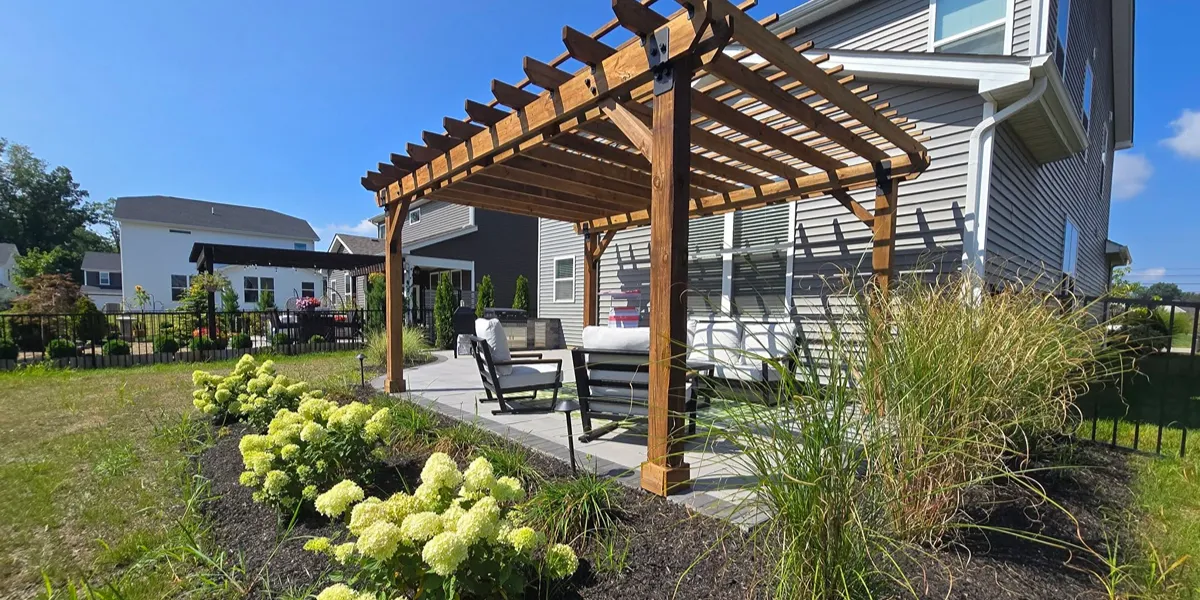
A pergola, pavilion or other shade structure can turn part of the patio or deck into a much more comfortable outdoor room. Depending on the design, it can also help create a greater sense of privacy from neighboring properties.
Major features such as shade structures and outdoor cooking areas can commonly add approximately $7,000-$15,000 or more to a project depending on their size, materials and complexity.
Outdoor Cooking and Entertaining
For homeowners who regularly cook outside, the project can go beyond finding somewhere to park the grill. A properly planned cooking area can be incorporated into the patio or deck so that it works naturally with dining and seating areas without interrupting how people move through the space.
Not every backyard needs a full outdoor kitchen. That's part of the planning process. The goal is to invest in features you'll actually use rather than checking boxes on a list of outdoor-living trends.
Low-Maintenance Landscaping and Privacy
The landscaping is what helps tie all of the construction together.
For newer homes, we can use landscape design and installation to soften the hardscape, define different areas and create increasing privacy as the landscape matures.
Low-maintenance trees, shrubs and plantings can be selected around the amount of upkeep you actually want to perform. Strategic planting can also help break up views of neighboring homes without turning the backyard into a wall of identical plants.
The result should feel established and intentional, even though the house and landscape may only be a few years old.
What Does a Complete Backyard Transformation Cost in Central Ohio?
Every backyard is different, but homeowners considering this type of project should have some idea of the investment before getting too far into the planning process.
For the type of new-construction backyard transformation discussed here, $25,000-$50,000+ is a reasonable planning range for a substantial project. Larger or more elaborate spaces can certainly exceed that amount, but you don't necessarily need a $100,000 backyard to completely change the way your property looks and functions.
For example, a homeowner might begin with a substantial patio in the neighborhood of $17,000 and combine it with a landscape plan, privacy improvements and a fire feature or seat wall. Another property may be better suited to a custom deck in the $25,000 range with landscaping and a shade structure.
A project in the $30,000-$50,000 range can potentially combine a well-designed patio or deck with landscaping and one or two significant outdoor-living features. The exact scope depends heavily on the property, materials, site access and what matters most to the homeowner.
Rather than treating those numbers as packages, think of them as a starting point for understanding what's possible. A site visit and design conversation are necessary to determine what makes sense for your particular backyard.
Plan the Backyard as One Space, Even If Everything Isn't Built at Once
One of the biggest advantages of starting with a relatively blank backyard is having the opportunity to think ahead.
A patio may work perfectly by itself today. But what happens if you decide two years from now that you want a pavilion in an area without proper footings? Or you install landscaping and later discover that part of it needs to be removed to build the deck you really wanted? What if the patio is sized without leaving enough room for the outdoor cooking area you've been considering?
A complete plan allows those decisions to be considered before construction starts.
That doesn't necessarily mean every component has to be installed on the same day. It means the outdoor living design accounts for where the project may ultimately go.
Drainage, utilities, lighting, elevations, structures, hardscape, landscaping and traffic flow can then work together rather than competing with one another later.
Your Backyard Should Give You a Reason to Go Outside
This is ultimately where the individual features stop mattering quite as much.
A patio is still a patio. A deck is still a deck. Landscaping is still landscaping.
What matters is what those pieces create together.
It's having enough room to bring dinner outside when the weather is nice. It's having friends over without dragging chairs across the lawn. It's being able to sit outside in the evening without feeling like you're sharing the space with every house behind you. It's having somewhere comfortable to relax while the kids play. And it's looking out the back window and seeing a finished part of your home instead of a project you keep meaning to deal with.
That's what a complete outdoor living plan can do with a blank backyard.
From Blank Slate to a Backyard You Actually Want to Use
If your new home came with a basic lawn, a small wood deck and not much else, you don't have to know exactly what should replace it. That's what the design process is for.
Double A Outdoor Living designs and builds custom outdoor spaces throughout Johnstown, Sunbury, Galena, Delaware, Lewis Center and surrounding communities north of Columbus. We can bring the deck or patio, landscaping, privacy and outdoor features together into one plan built around your property and how you want to use it.
If you're looking at a blank backyard and know it could be something much better, let's start there.